

Transformative Trends in Beverages
Today’s beverage choices go far beyond simple hydration. Some consumers may be seeking functional benefits, convenience, and enjoyment, while still supporting their overall wellbeing.


What consumers are looking for in beverages
Beverages are becoming more experience-driven, with consumers seeking sensory engagement, layered flavours, and visually appealing presentation from vibrant lattes to creative, visually striking drinks. While water is essential, coffee and tea remain favourites, but note that one in three out-of-home coffee purchases are now served cold.1 Some consumers are also looking for beverages with added protein, fibre, or other nutrients, often in convenient, on the-go formats which they may even choose instead of a light meal. Others are seeking indulgent, treat-like drinks, sometimes in smaller, more reasonable portions.
Functional beverages are gaining popularity
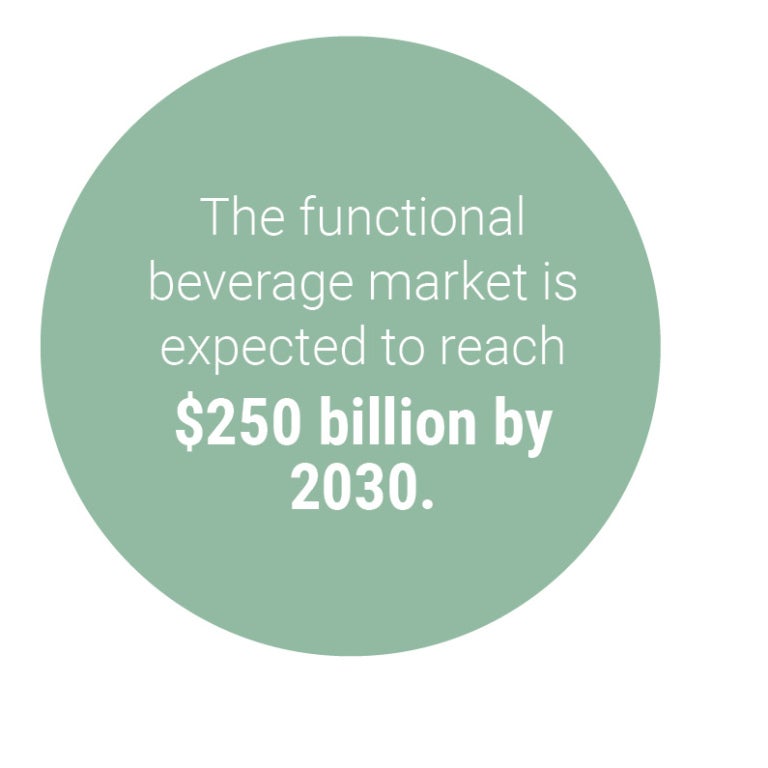
One of the hottest trends in beverages is drinks with functional benefits. From water fortified with vitamins to coffee, tea, juice, or kombucha with protein or fibre, to low-sugar drinks, the functional beverage market is expected to reach $250 billion by 20302, providing new opportunities for revenue. Not only do they offer benefits that consumers want, they also come in a convenient grab & go format that appeals to consumers looking for convenient, lighter choices throughout the day.
Matcha is trending
Matcha continues to gain momentum across foodservice, with iced formats especially popular. Driven by its perceived health benefits, it is increasingly chosen as an alternative to coffee, particularly by younger consumers. As demand grows, matcha is becoming a lasting feature on beverage menus.
Everyday beverages vs. indulgent drinks
Did you know that 45% of consumers link balance with variety, recognizing indulgence as part of wellbeing?3 There’s room for both on the menu, and you can meet a variety of consumer needs by providing a range of beverages.
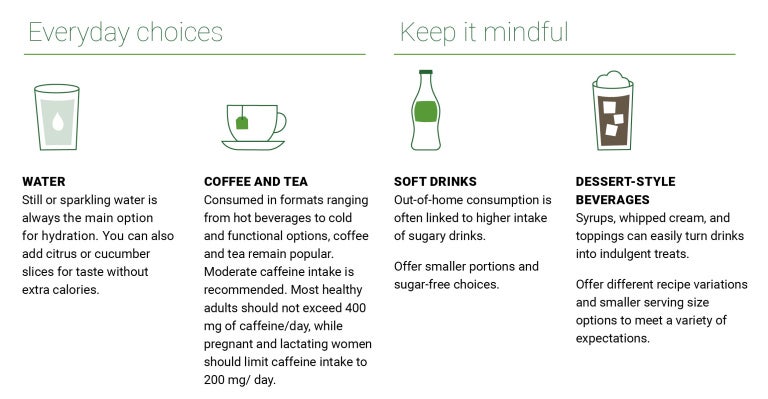
Still or sparkling water is always the main option for hydration. You can also add citrus or cucumber slices for taste without extra calories. Coffee and tea also remain popular, consumed in formats ranging from hot beverages to cold and functional options. Remember that moderate caffeine intake is recommended. Most healthy adults should not exceed 400 mg of caffeine/day, while pregnant and lactating women should limit caffeine intake to 200 mg/ day.4
Encourage mindful consumption of beverages that are considered indulgences. Remember that out-of-home consumption of soft drinks is often linked to higher intake of sugary drinks5. To counter this, you can offer smaller portions and sugar-free choices.
The same advice applies to dessert-style beverages. Syrups, whipped cream, and toppings can easily turn drinks into indulgent treats. While they can stay on the menu, you can offer different recipe variations and smaller serving size options to meet a variety of expectations.
Sources:
1Nestlé CUP Research 2025.
2Food Navigator. Www.Foodnavigator. Com/Article/2025/10/02/Functional- Drinks-Market-to-Hit-248bn-by-2030/ (13 July 2026).
3FMCG Gurus – Indulgence – Top 5 Trends for 2025. Fmcggurus.Com/ Blog/Indulgence-5-Trends-to-Stay- Ahead-of/ (15 July 2026).
4EFSA. Caffeine. Www.Efsa.Europa. Eu/En/Topics/Topic/Caffeine (15 July 2026).
5Gesteiro, E., et al. Eating out of Home: Influence on Nutrition, Health, and Policies: A Scoping Review. Nutrients 2022, 14.